Book 1
Part I
Crossing Jordan
Chapter 1
Gloucestershire, England
Joshua Lock stabbed a grubby forefinger at the book’s yellowed pages.
His mouth worked, fish-like, over the text which bled badly from one
gauzy page to the next. Crossly, he pushed unruly brown hair up from
his forehead. He was fourteen, now. He could manage the other words,
so why not this one? Moving the table nearer the window did not help,
either. Lifting the heavy oak was easy – hammering iron had muscled
his arms and chest – but there was no moon that night to add to the feeble
halo of light cast by his sputtering oil lamp. He tried again
“Supp…” he began, his lips making an involuntary popping sound
at the end. “Supp-or…”
BANG!
Lock’s crashing fist made the old table leap a good inch off the stone
floor. Motes of dust rose from between its thick planks and the oil lamp
teetered precariously. Instinctively he grabbed at it, scorching his
fingers on the glass.
“One…”
He fumbled with the lamp, at last righting it on its base. Between
stifled oaths he blew furiously on smarting fingers.
“Two…”
His anger was subsiding. His grandfather taught him the trick soon
after his parents died, how to count up to ten before the emotion
consumed him and he lost control. Then he had been angry all the time.
Nowadays he rarely got past…
“Three!”
Lock sighed. He felt stupid for what angered him was merely a
word. He looked at it again, squinting in the lamplight, and ran his finger
under it on the page. Supp – something.
The lamp flickered as the door behind him opened and a draught
caught the flame. He knew it was his grandfather, Lock could hear the
old man’s rasping breath and the slow shuffle of boots over the flags.
He straightened on his stool.
“What is it, boy?”
Lock pointed at the damned word. “I can’t read that, Abraham.”
His grandfather picked up the old book with reverence. Its end
boards and title page had been lost long ago. Abraham raised it so that
it was just a couple of inches from his face, eyebrows working comically
as he strained to make out the text in the meagre lamplight.
“Suppurate,” he enunciated the word, a subtle note of pedantry in
his tone.
“What’s that mean?” Lock had never heard it before.
Abraham paused as if in thought. “When a wound fills with pus.
Means it needs a poultice.” He placed the book down carefully and put
his finger under the word. “Look, sup-you-rate,” he said, jabbing each
syllable for emphasis. “It’s not difficult.”
Lock snorted. “That’s easy for you to say.”
“You shouldn’t be reading in this light, anyway,” his grandfather
scolded. “Do you want to end up with eyes like mine? God made the
daylight for reading and the dark for the devil’s work.”
Lock shrugged. He could not see himself ever being as old as his
grandfather but he obediently picked up the book and crossed to the
shelf where it was stored alongside the only other reading matter in the
smithy. That was a heavy, leather-bound Bible with faded gold lettering
across its wide spine. The word of God. Once, Lock enjoyed its stories
but he never read them now. God took his parents, he was told, so why
should God’s word matter to him? The Lord could go to hell, he thought,
feeling no guilt at the blasphemy.
There was a piece of oilcloth on the shelf. He carefully wrapped it
around the book he had been reading and placed it alongside the Bible.
He still had chores to finish.
It was quiet and still outside the cottage. Ice had begun to form on
the surface of the water barrel. Lock prodded at it with a grubby finger,
tracing a pattern and breaking the thin skin, his breath steaming in the
cold air. He walked away from the smithy down a short track to the
meadow where a horse grazed. Earlier, he had left an armful of hay
under the hedge. Now he pulled it out, shaking new frost from the dry
stalks. The horse looked up as he walked towards her, calling, and
eventually she ambled over, whickering in recognition.
Lock dumped the hay in a pile on the ground in front of her,
watching as she took a mouthful and chewed contentedly. She was old
and her coat grew thick at this time of year to keep the cold at bay. As a
small child, Lock was thrown onto her broad back and led around, up
and down green pathways, holding tightly to her long mane. When he
was older he rode bareback through woods and meadows, fancying
himself an armour-clad knight of old. In his reverie he would charge
into battle, standard fluttering from his lance, beating down enemies
with a razor-sharp sword to save the lives of kings and princesses.
Lock patted the mare’s sway-back affectionately before he re-traced
his bootprints back to the cottage. Even though he closed the door
behind him, cold air trickled in where its frame warped. He hooked up
a piece of thin leather that served as a curtain across the window. The
fire was almost out, he saw. If it died now, the cottage would be freezing
in the morning which was bad for his grandfather’s chest. But bringing
the coals back to life meant fetching more from the forge inside the
smithy next-door and he decided that tonight he could not be bothered.
He looked into the iron pot by the fire containing leftovers of the
vegetable stew they had eaten earlier in the day. It was cold and
congealed. Lock prodded at it with a spoon but could not bring himself
to eat any of the unappealing lumps. There was bread and some cheese
in the larder but if he ate that there would be no breakfast, so he left it.
But there would be meat tomorrow for with any luck he planned to
go hunting coneys in the afternoon. Rabbit stew for supper! He could
taste it already and just the thought made his stomach growl. He had
grown used to that feeling.
Lock sighed. He would go to bed hungry again. Stepping into the
back room he lay down on the cot that served as his bed but left his boots
on when he pulled the blanket up over his head. At least his feet would
be warm in the morning.
The Honourable John William Killen stood on the landing that served
every room on the first storey, right at the summit of the staircase. It was
a massive structure with two wide wings which curved downwards into
the hallway of Halcombe House. He laid his head on top of the righthand banister rail, sighting along it. The polished wood was cool
against his cheek. This time, he decided, he would go all the way down.
Killen had practiced for weeks when no one was looking. He started
low down, near to where the end of the rail curled to meet its final
support and had gradually moved upwards, one stair at a time until he
reached the halfway point. But today was a special day. It was his
father’s birthday and in honour of the event, dinner was to be served in
the main dining room. He would sit at the head of the table below the
huge portrait his grandfather had commissioned. Killen felt unworthy of
such honour and had decided that to deserve it, he must do something
bold and reckless. A dare that would surely have made his father proud.
Killen hitched up his right leg so his calf lay across the rail, shifting
his body so that he was half sitting on it. Years of polishing made the
banister slippery as ice but that would be a boon once he was moving.
He inched his way slowly along to the point where the rail started to fall.
Now he could see the whole staircase curving downwards. It looked
an awfully long way! Perhaps he should start lower down? No! He had
decided he must brave the entire length. Steeling himself, he flicked
away the lock of hair that habitually fell across his forehead and took a
deep breath. It was now or never. He wriggled a bit further and suddenly
he was off! Killen wobbled slightly as he accelerated but then he was
whooshing madly down the rail towards the tiled floor below,
exhilaration flowing through his frail body.
In his excitement the short journey seemed to last an eternity. He
slid past portraits of relatives and ancestors whose stern faces seemed to
glare with disapproval as he flew by.
Then suddenly he was at the end. The banister dropped him
towards the floor and he landed feet-first, staggering for a couple of
steps until he regained his balance. He smiled broadly, for though his
heart was hammering he had done it. He had done it!
“I wish you wouldn’t, Johnny.” His grandfather emerged from the
corridor on his left and scolded him gently. “It is all too easy to break
one’s leg. Dinner will be served shortly, if you are ready?”
Killen looked at him sheepishly. “Sorry, grandfather,” he said, but
without much conviction, for he did not feel contrite. He had done it!
Roberts, Lord Halcombe’s manservant, had lit both large silver
candelabra on the dining table. Two places were set and Killen walked
slowly to his seat at the far end. He touched the back of each chair he
passed. There were ten, for the table was extended to its full length.
Before he sat down he walked the few extra steps to the end of the room.
On the open lid of the harpsichord which stood there he saw his
grandfather had placed a small portrait of his grandmother, but it was
dwarfed by the picture above. Killen stared up at the huge painting on
the wall behind his dining-place. It celebrated a young man in the
uniform of a cavalry officer, bright gold braid on a dark jacket, a crested
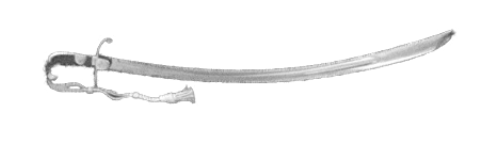
helmet on his head and in his hands a great, curved sword. Killen had
gazed at the portrait a hundred times but its magnificence always twisted
his stomach into knots. His father was standing moustached and smiling
with his sabre in front of him, tip propped on the stump of a tree and
with his gloved hands resting on its pommel. The portrait’s background
was dark, brooding almost, but around his father’s feet spring flowers
bloomed in a coloured carpet which slowly faded into the shadows
behind. A willow tree sprouted at one side to frame the shining figure
with sad, drooping branches.
Lord Halcombe seated himself heavily and rang a small silver bell.
As he replaced it on the white linen tablecloth his manservant appeared.
“We’ll eat now, thank you, Roberts.”
The servant gave a small bow. “Very good, my lord,” he said quietly
and disappeared again.
Killen put down his glass. He was not allowed the best wine very often,
but this evening the cellar had been searched for an exceptional bottle
of claret to mark the occasion.
“A toast,” his grandfather said, “a toast to William Grenville Killen.
My son, your father.” They both turned to the portrait, raising their
glasses. It was odd, Killen thought, to be celebrating a man he had never
known although he often had to toast the King, who he did not know
either, and that was deemed acceptable. His grandfather seemed to have
a watery look in his eyes as he took a draught from his glass but Killen
could not be sure, so said nothing.
In the awkward silence afterwards, Killen wondered if now was the
right time to broach a subject dear to his heart. His grandfather picked
up a napkin, dabbing his mouth. It was white linen, matching the
tablecloth, and Killen noticed that when he put it down his lips had left
a red stain.
“Grandfather,” he began, “I’m old enough now.” He paused, not
quite sure how best to continue but Halcombe stayed silent so he
plunged on, “And you did say you would write once the time came.” He
gave his grandfather a pleading look.
George Arthur Killen, Lord Halcombe, looked back at his grandson and
smiled sadly. He knew what the boy was after and while it was true that
his fifteenth birthday was two weeks past, he was not yet ready. Neither
was Halcombe ready to lose his grandson to a service that had already
killed the boy’s father. He mulled over different excuses for weeks,
knowing that the boy would soon ask him to write a letter requesting a
recommendation to join a cavalry regiment.
“Have you decided yet,” he asked slowly, “which regiment you wish
to join?”
“The Seventh.” No hesitation, “Lord Paget’s.”
Halcombe nodded gravely, “A good choice.”
“You know him, don’t you?” Killen asked.
Halcombe was non-committal. “Only slightly,” he said carefully.
“I have dined with him once or twice but he may not remember me.”
Killen smiled, “Of course he will! When will you be able to write?”
His grandfather looked serious. “I believe the Seventh will only take
officer recruits who are over sixteen,” he said. “Perhaps it would be
better if you were to wait a year.”
“I’m sure they would take me,” Killen refused to be dissuaded.
“William Meacher joined the 33rd last year, and he was only fifteen.”
Halcombe sighed. “Infantry regiments are less particular, so I am
told,” he said with distaste. “And in any event, there is plenty for you to
do on the estate. I need you here to oversee my affairs if I must travel
away. My bones grow older,” he smiled, teasing. “Who would take over
if anything should happen to me?”
Killen scoffed at the thought. “You’re not that old, grandfather! And
you have the staff to help you. And anyway,” he added as persuasion,
“you promised you would! Please…. will you write?”
Halcombe decided to drop the matter for now. “We’ll see,” he said
vaguely. “Have you anything planned for tomorrow?”
Killen seemed not to notice the smooth change of subject. “I thought
I’d take The Tempest out again,” he said. “He’s getting much easier now
and I must keep working him.”
His grandfather nodded agreement, “He should make a fine hunter
for next season,” although privately he thought the thoroughbred horse
he purchased as a birthday present might be proving too difficult for the
boy. “Now, off to bed with you. Goodnight, Johnny.”
He watched his grandson trot gaily down the length of the dining
room and out through the door. He was young for his age, Halcombe
thought. Johnny’s slight build and poor constitution did not help
matters. In that, he was most unlike his father who had always been of
robust good health.
Halcombe felt protective. Johnny would not find the rigours of a
military career easy to bear, even cushioned by an officer’s more
privileged lifestyle. And if he were ordered into battle? Halcombe did
not wish to consider the possibility but Bonaparte’s seemingly
unstoppable progress across Europe made such a thing likely at some
point if the boy insisted on a position in the King’s service.
Halcombe rose from the table and stood in front of his son’s portrait.
He looked up at the gaudily dressed cavalry officer, seeing Johnny’s fair
hair and smiling blue eyes “Damn you,” he cursed the painting quietly,
under his breath. “Damn you.”
Retrieving the oval frame he had placed on the harpsichord before
dinner he stared at the face of the picture it held. A woman, young, fairhaired and smiling. Halcombe insisted the painter capture her happiness
as it was that which had first drawn him to her. Always a smile, he
remembered. Always laughing, filled with joy. His late wife’s eyes
looked back at him and he put his right hand on the picture, trailing his
fingertips gently over the contours of her face. “I shall keep him close,
my dear,” he promised the likeness.
And clutching the portrait to his heart he turned away from his dead
son.